
Transforming Navigation Testing Analysis
In the fast-evolving world of UX research, artificial intelligence is opening new doors for deeper, faster, and more insightful analysis. Recently, I used an AI assistant to analyze an A/B navigation study. This experience showcases how AI can transform the way we approach UX Research data analysis.
The Challenge: Making Sense of Complex Navigation Data
My study involved participants testing two different navigation structures for software we had in development. The key difference? Test A was my control group, I tested a navigation that we have already been using. In Test B I had slight variations in the navigation structure. Participants completed 10 identical tasks in both versions, generating a wealth of data on:
- Success/failure rates
- Completion times
- Navigation paths
- First clicks
- Final destinations
At the end of the study I extracted all of the raw data and created a workbook in Excel. The workbook contained all data from Test A and Test B. It also included an instructions tab where I included all of my AI prompting instructions. I will have another blog coming about managing and evolving your AI prompts.
Enter AI-Assisted Analysis
With the workbook and prompting ready, I used my AI tools to:
- Process data at scale: The AI quickly analyzed success rates and completion times across all tasks, providing immediate insights into overall performance differences between the two navigation structures.
- Identify specific task challenges: For example, our analysis revealed that Task 10 had extremely low success rates in both test versions, highlighting a critical usability issue regardless of navigation structure.
- Compare navigation designs objectively: For the tasks directly affected by the “A” vs “B” navigation change, I was able to very quickly see which navigation performed better. But even more interesting, I was able to immediately see which tasks were indirectly affected by the A/B change.
- Visualize results instantly: The AI generated visualizations that showcased flows and comparatives that would have otherwise taken hours or days to produce.
Benefits of AI-Assisted UX Research Analysis
1. Speed and Efficiency
What would have taken days of manual analysis was completed in hours, allowing me to focus on interpreting and sharing timely results. AI does not make processing magically go away. But now, processing is in the form of prepping data for ingestion, writing AI prompts, and validating what AI produces to ensure accuracy.
2. Comprehensive Analysis
The AI worked great for providing a breadth of analysis that I would not have been able to turn around in such a short period of time. The indirect impacts of the A versus B testing, was nice icing on the analysis cake.
3. Unbiased Insights
By letting the data speak for itself through objective metrics, we reduced the potential for confirmation bias in our analysis. This also helps with stakeholder buy-in. My usually nay-sayers were more accepting of an AI assisted analysis.
4. Deeper Pattern Recognition
The AI identified subtle patterns in navigation paths that might have been missed in manual analysis, revealing how users were actually thinking about the information architecture.
The Future of AI in UX Research
AI-assisted analysis is an essential tool in the UX researcher’s toolkit. However, it’s important to note that AI doesn’t replace human researchers—it amplifies their capabilities.
The human element remains crucial for:
- Designing appropriate research questions
- Developing AI prompts for an accurate analysis
- Interpreting results in context
- Understanding the “why” behind the numbers
- Translating insights into actionable design recommendations
- Collaborating with extended teams to advocate for better experiences
Conclusion: A New Research Partnership
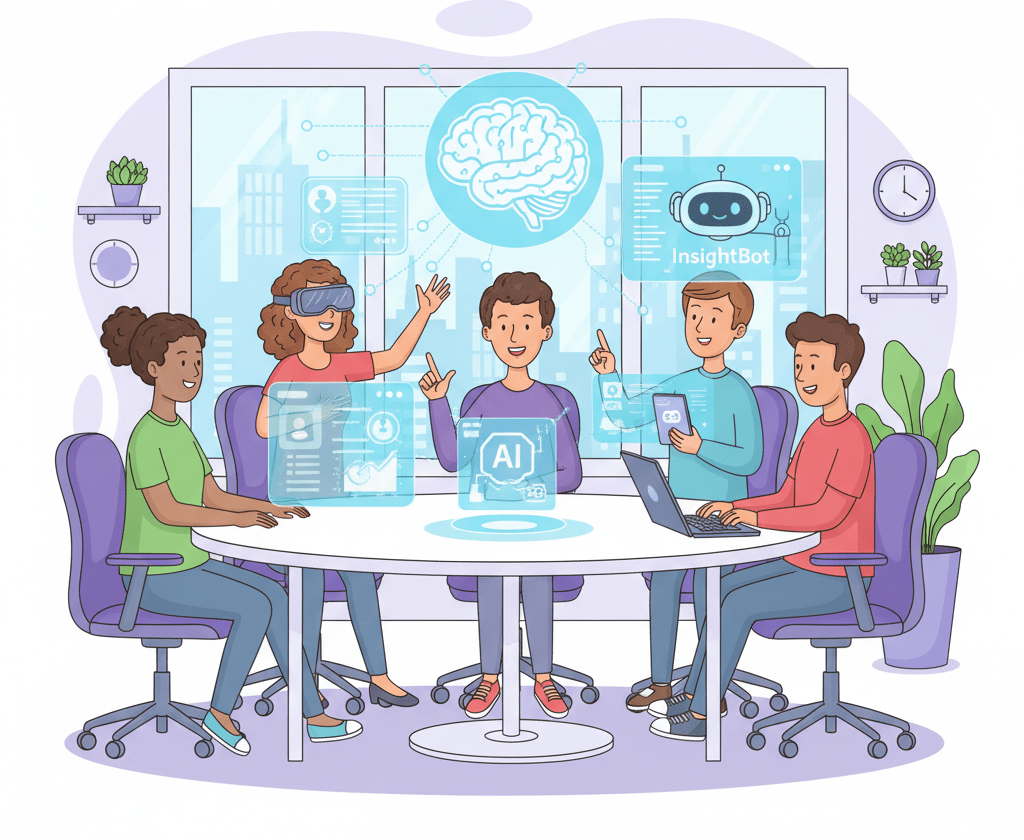
As UX Research continues to evolve, the partnership between human researchers and AI assistants represents an exciting frontier. By leveraging AI’s computational power while applying our human expertise in context and empathy, we can deliver deeper insights, faster iterations, and ultimately better user experiences.
The future of UX research isn’t just human or just AI—it’s human and AI working together to understand users better than ever before.





Leave a comment