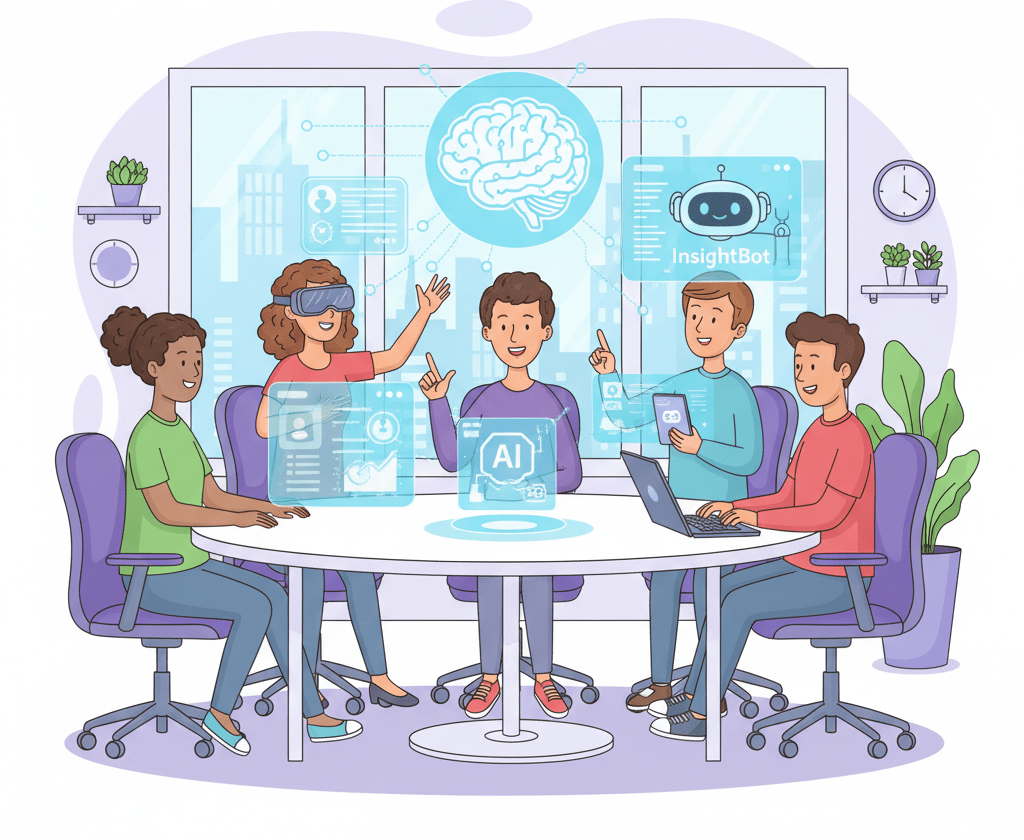
In the past year, AI has quietly transformed the way our research team works. Not by replacing what we do, but by helping us move faster, prepare better, and collaborate more deeply with our product partners.
Here are a few ways we’re seeing real impact — and where we’re still learning how to balance automation with the human side of research.
1. Ramping up faster than ever
The time it takes to “get smart” on a new topic or product concept has shrunk dramatically. What used to be one to two weeks of desk research, stakeholder interviews, and synthesis can now be compressed into a few focused hours.
With AI-assisted research tools, we can scan industry trends, user behaviors, and competitor approaches in a fraction of the time. This means that by the time we walk into a project kickoff, we’re not starting from scratch — we often come with a draft research methodology and a proposed discussion guide ready for review.
That early head start changes the dynamic: instead of spending the first week aligning on basics, we’re already co-creating and refining.
2. Generating early hypotheses for emerging products
For products in early development — when everything is still a little ambiguous — AI has been a surprisingly powerful thought partner. We can spin up quick, directional personas and test hypotheses around potential user needs or behaviors.
This doesn’t replace foundational research, but it gives us a running start. Historically, product managers often came to the table with concepts that lived primarily in their heads. Now, we can meet them there — proactively surfacing assumptions, identifying risks, and proposing what to validate next.
It’s made us stronger collaborators, able to shape product direction earlier and with more confidence.
3. Where the human touch still matters most
There’s one area where AI has not yet accelerated us in a meaningful way: analysis and storytelling.
Our analyses are often deeply contextual. We tailor insights to what will resonate with specific product managers, teams, or leadership audiences. We know the personalities in the room, the open questions they care about, and the angles that will get them to listen.
AI can summarize or visualize data, but it lacks that social intuition — the relationship-building aspect that makes insights land.
So, we use AI selectively here: to augment, not automate. It helps us refine presentations, check consistency, and occasionally surface a pattern we might’ve overlooked. But the final synthesis — the story we tell and the way we tell it — still firmly belongs to the researcher.
The takeaway
AI is reshaping the tempo of UX research. It’s reducing ramp-up time, enabling us to meet our partners at a higher level of readiness, and freeing us to spend more energy on what humans do best — interpreting nuance, building trust, and telling the story behind the data.
We’re moving faster, yes. But more importantly, we’re moving with greater strategic impact.





Leave a comment